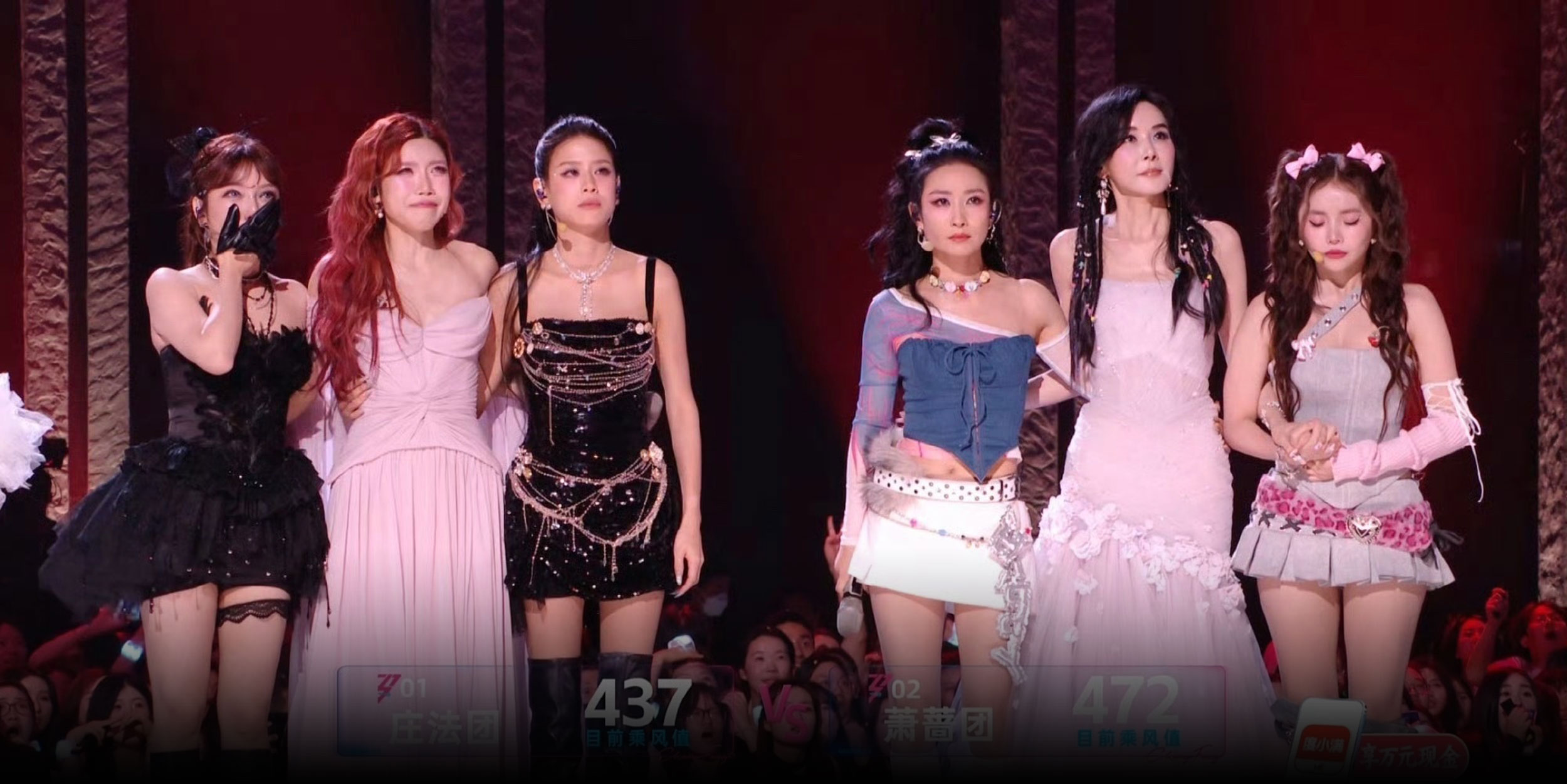
China’s Latest Season of ‘Ride the Wind’ Goes Viral Due to Poor Performances, Drama
China’s all-women variety show “Ride the Wind” has returned, topping social media rankings — not because of its message of female empowerment but because of off-key singing, emotional breakdowns, and allegations of manipulated results.
Premiering April 2 on domestic video streaming site Mango TV, the seventh season of “Ride the Wind,” previously known as “Sisters Who Make Waves,” invites 33 contestants, or “sisters,” to compete for a spot in a roughly 10-member girl group. For the first time, it also adopts a live rather than a prerecorded format.
The show was once seen as a break from traditional youth and beauty standards surrounding girl groups, instead celebrating women of different ages, appearances, and professions.
On its first day of release, the latest season topped the domestic variety show market-share rankings, and total online discussions exceeded 3.6 million on microblogging platform Weibo at the end of the third. Engagement on ratings platform Douban reached 140 million, a platform record.
But in contrast to previous seasons, much of the discussion this time has centered on off-key and low-quality singing. After the first live show, viewers began widely reposting and remixing clips of some of the participants, commenting that they had put on a “kindergarten-level performance.”
The new live format, while fueling real-time discussion, has also drawn criticism for its chaotic pacing. The premiere introduced all 33 contestants, each accompanied by one or two guests, resulting in a nearly five-hour broadcast. Viewers complained of obstructed views of certain contestants and disorganized visuals.
One of the most viral moments came when four-time Olympic speed skating champion Wang Meng complained during her entrance that the show was “dragging on too long,” earning the praise of many audience members who concurred. Subsequent footage showed Wang criticizing the chaotic set, comparing it to a “wet market.”
Subsequent episodes have shown contestants forgetting lyrics during evaluations, having emotional breakdowns, and even audience members shouting “shady” from the stands following judge decisions.
Other viewers have praised the live format for its rawness and authenticity. “Without heavy editing, it feels real and alive. It’s been a long time since a show in China’s entertainment industry made me laugh this much,” read one highly upvoted comment on Douban.
However, the show has also been criticized for prioritizing hype and online traffic over quality, and for exploiting contestants’ emotions.
“The show’s original intention was to let women over 30 shine with confidence, free from the constraints of age,” read one popular comment on Weibo. “But now it feels like it’s constantly draining the contestants’ emotions and sincerity for the sake of manufactured drama. As a longtime fan of the franchise, it’s deeply disappointing.”
This year, with a higher proportion of untrained singers among the contestants, performance levels have varied widely. Many viewers have expressed frustration at seeing weaker performances receive disproportionately high rankings in the competition because they were performed by known actors.
During the first public performance, a group that struggled to sing in tune and made lyrical mistakes but was more popular with the audience advanced. After getting eliminated, a contestant and former host of state broadcaster CCTV said on camera, “I don’t understand what the judging criteria are.”
Another eliminated contestant took to Weibo to repost content that alleged Mango TV had engaged in a smear campaign against her. Tagging the production company, she wrote, “Come out and say something.” The post was subsequently deleted.
Editor: Marianne Gunnarsson.
(Header image: Two groups of “sisters” await their ranking results. From Douban)